
Sim4Life News
ZMT and IT’IS Foundation Bring In Silico to The MedTech Conference 2026
Read Article
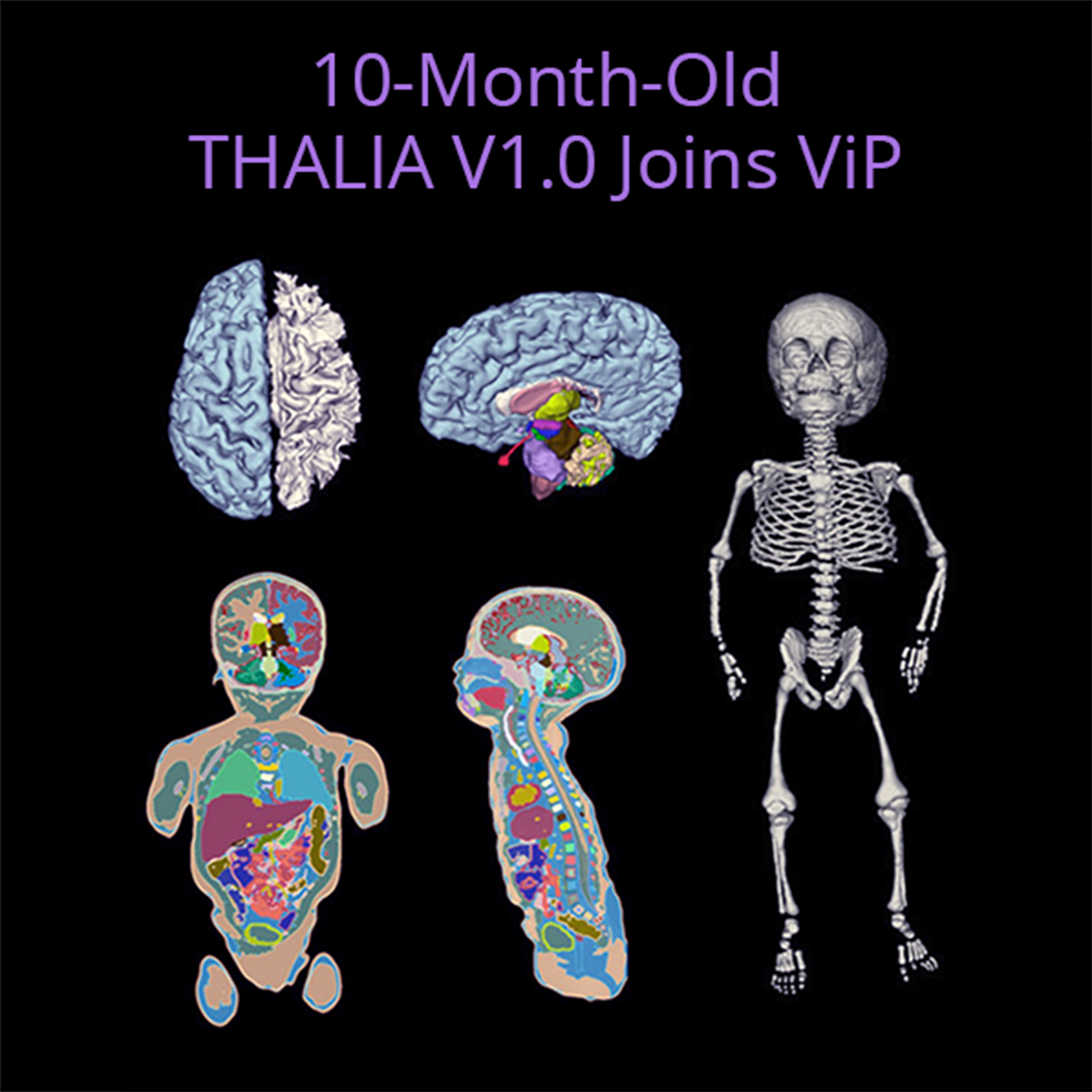
IT’IS Hosts New Pediatric Model THALIA V1.0
Read Article
Hands-On Learning with Sim4Life.lite at URSI GASS 2026
Read Article
ZMT, TI Solutions, and IT’IS Foundation Exhibit at 2026 NYC Neuromodulation Conference
Read Article

Sim4Life Student Competition 2026
Read Article
Sim4Life V9.6: Fast Neural Response Prediction for Clinical Neurostimulation
Read Article
ZMT and IT’IS Foundation Bring In Silico to Swiss MedTech Day 2026
Read Article
ZMT and TI Solutions Exhibit at INS 2026
Read Article
Sim4Life V9.4 Release
Read Article
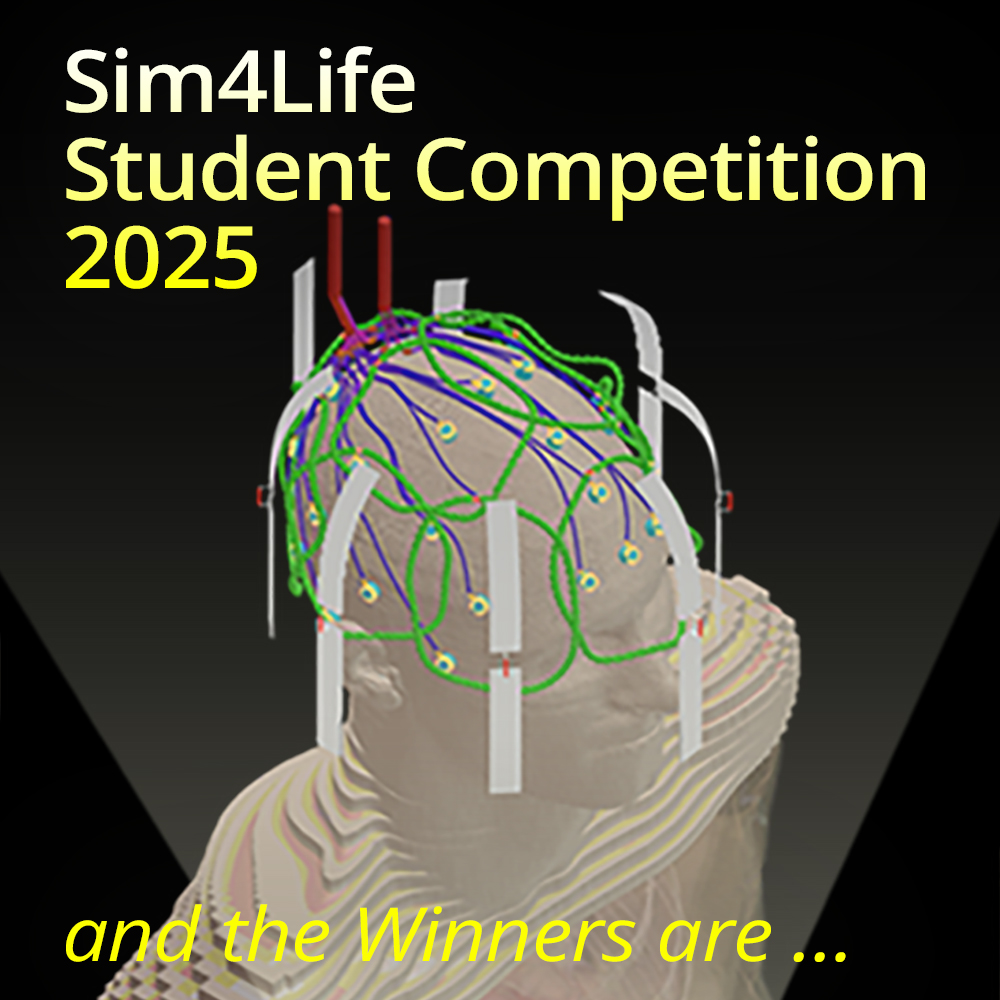
Sim4Life Student Competition 2025 Winners
Read Article
Sim4Life V9.2 Desktop Release
Read Article
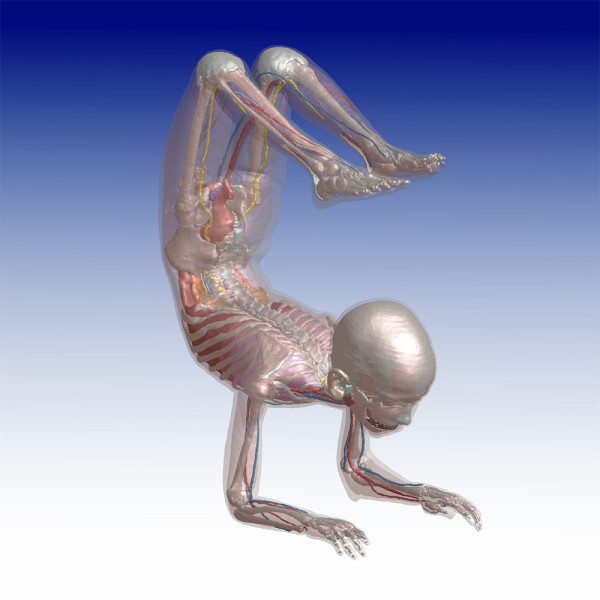
Enhanced Posability in Upgraded ViP Models
Read Article
Sim4Life Showcase at the 2025 IEEE Neuroengineering Conference
Read Article
Sim4Life V9.2 web: The Beginning of Modeling Intelligence
Read Article
ZMT and IT'IS at the ISMRM MR Safety Workshop 2025
Read Article
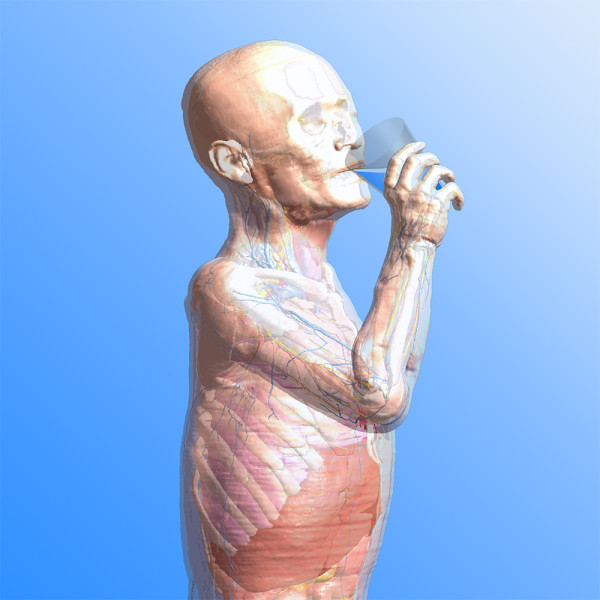
Release of Tissue Properties Database V5.0
Read Article
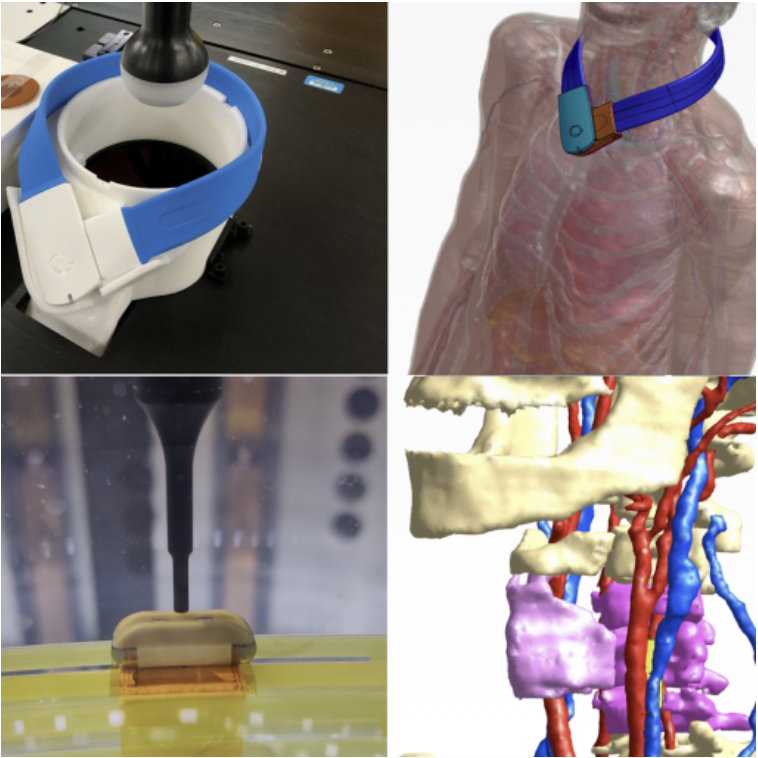
Simulations Supporting FDA Approval
Read Article

Sim4Life Student Competition 2025
Read Article

Sim4Life V9.0: Moving Toward a Universal Tool for CLS
Read Article
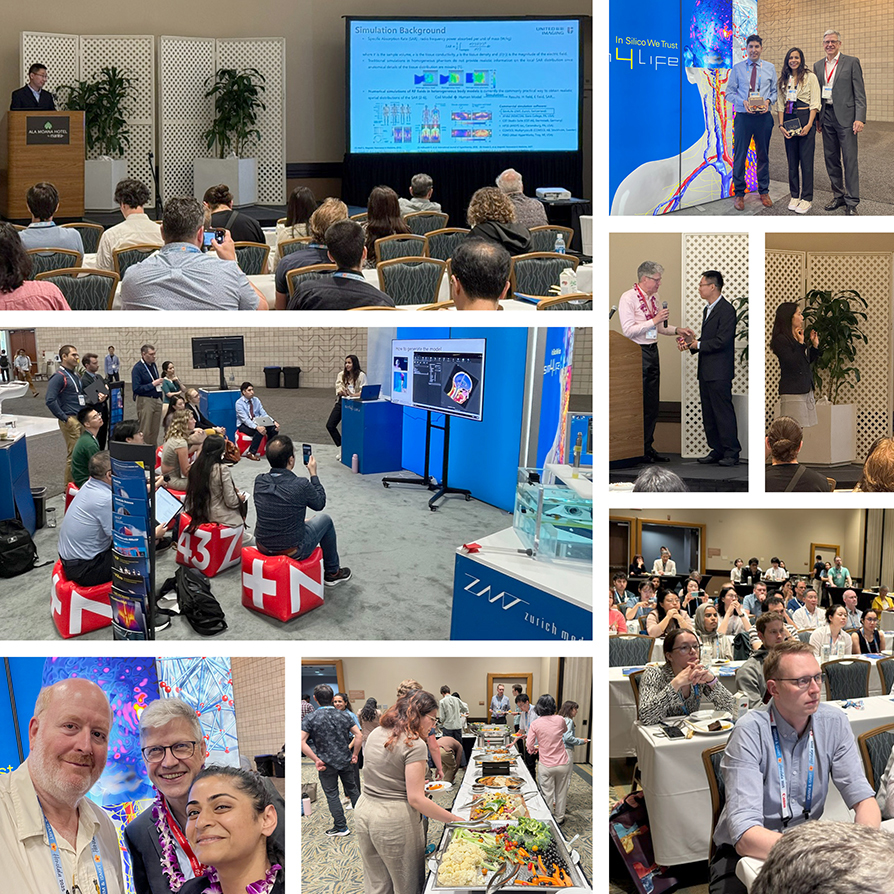
Sim4Life User Workshop and ZMT Exhibition at ISMRM 2025
Read Article
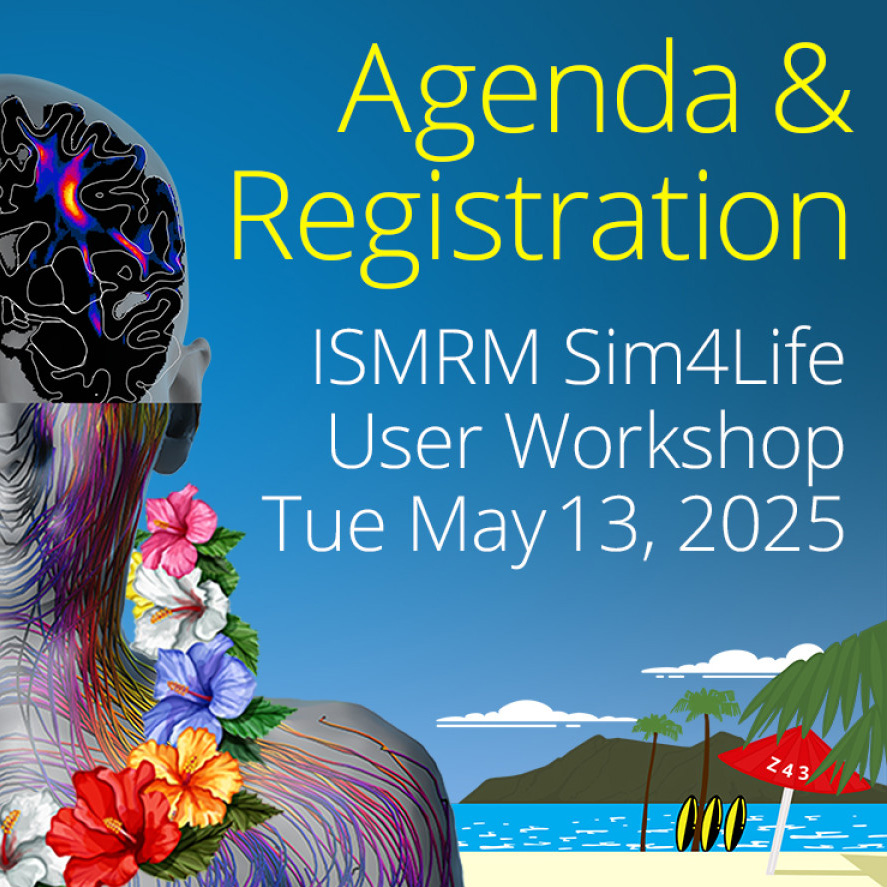
Agenda & Registration: ISMRM Sim4Life User Workshop 2025
Read Article
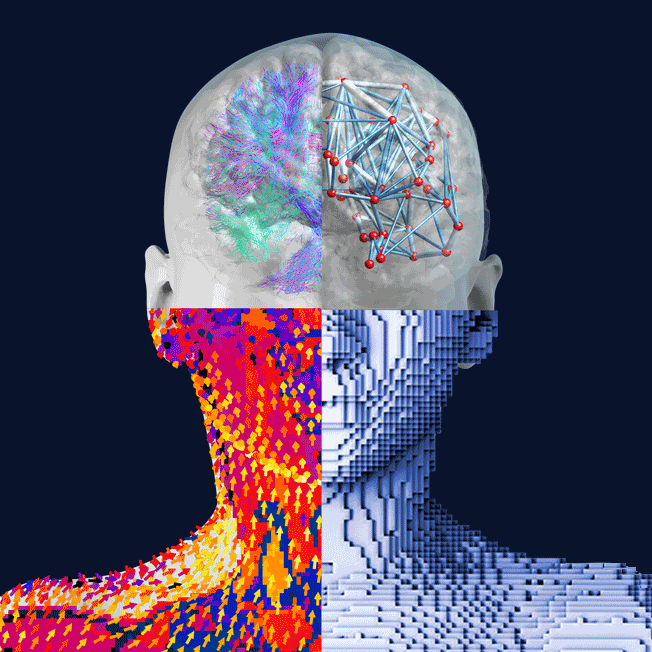
Sim4Life V8.2.2 Maintenance Release
Read Article

Sim4Life.Web V8.4: The Prep Step for Sim4Life V9.0
Read Article
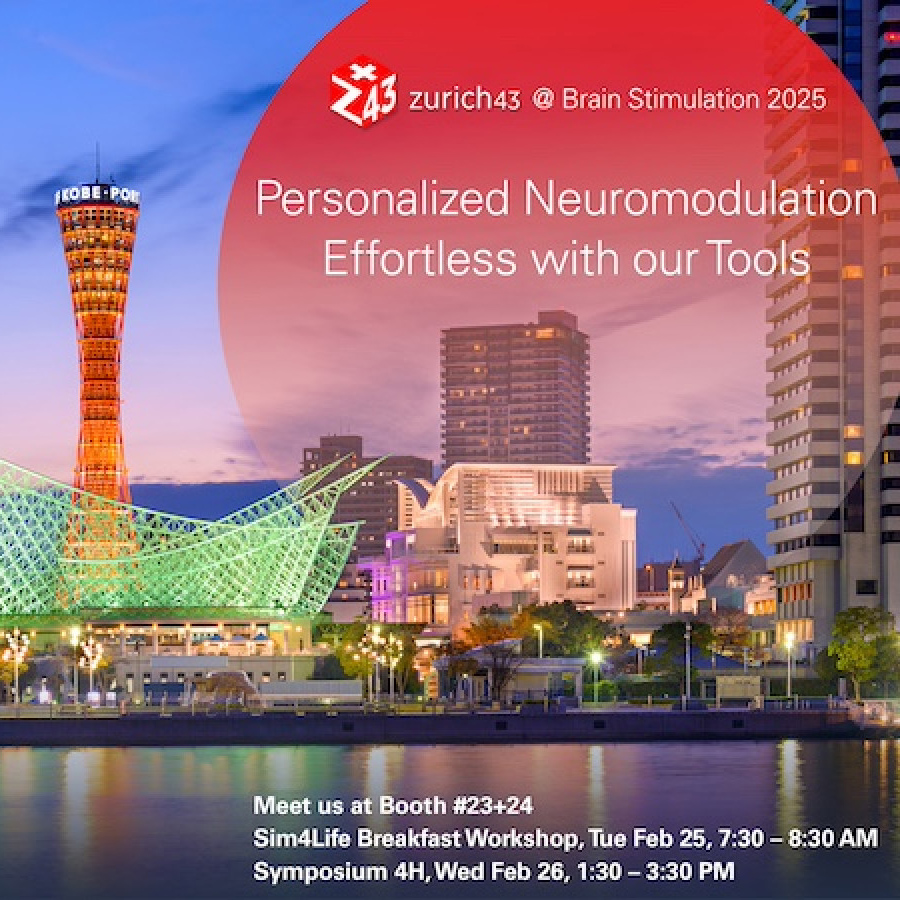
ZMT and TI Solutions Exhibit at Brain Stimulation 2025
Read Article
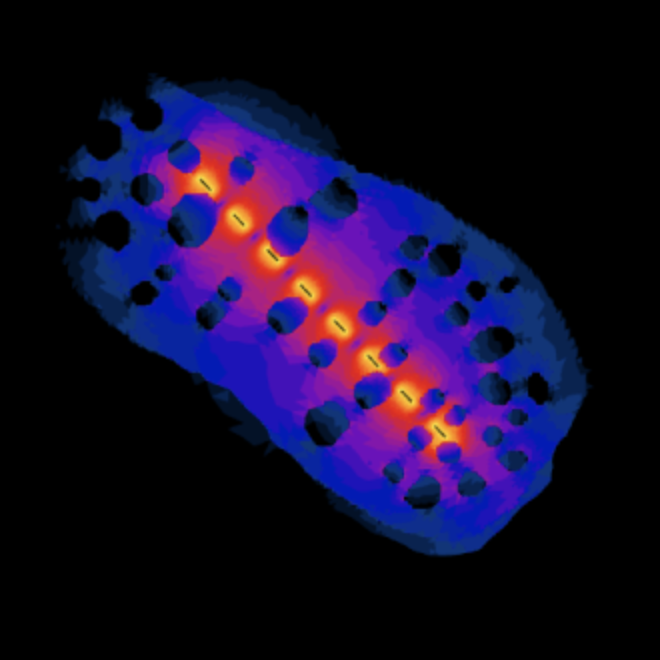
The Winners: Sim4Life.lite Student Competition 2024
Read Article
ZMT and TI Solutions Exhibit at NANS 2025
Read Article
ZMT News
Exhibitions and Workshops 2026
We will participate in the following conferences and exhibitions presenting Sim4Life and validation hardware solutions for medical devices.
| Exhibition at World Congress of the International Neuromodulation Society | Lisbon, Portugal | 9 May – 14 May |
| Exhibition at International Applied Computational Electromagnetics Society (ACES) Symposium | Thessaloniki, Greece | 24 – 27 May |
| Exhibition at FENS Forum of Neuroscience 2026 | Barcelona, Spain | 7 – 10 July |
| Exhibition at Annual International Conference of the IEEE Engineering in Medicine and Biology Society | Toronto, Canada | 26 – 30 July |
| Exhibition at Virtual Physiological Human Conference | Milan, Italy | 1 – 4 September |
| The MedTech Conference | Boston, USA | 18 – 21 October |
Public workshops will be held in the Korea, Taiwan and China. Please contact local representatives or s4l-info@zmt.swiss for more detailed information.
| Workshop in Taiwan | Taipei, Taiwan | 10 July |
| Workshops in China | Beijing, Shanghai, Shenzhen, China | 13/15/17 July |
| Workshop in Korea | Seoul, Korea | 17 September |
We will also be present in the following international conferences without a technical exhibition, please contact us if you want to meet with one of our representatives.
| Mobile World Congress | Barcelona, Spain | 2 – 5 March |
| European Conference on Antennas and Propagation 2026 | Dublin, Ireland | 19 – 24 April |
| Swiss Medtech Day | Bern, Switzerland | 10 June |
| Annual Meeting of the BioEM Society | Cairns, Australia | 21 – 26 June |
If you would like to arrange a demo or meeting, or are interested in attending a technical workshop, please send an email to s4l-support@zmt.swiss.
Sim4Life Education
Sim4Life is proud to support the lecture course “EM-Neuro Modeling Across Scales for Bioelectronic Medicine” at ETH Zurich, taught by Dr. Esra Neufeld. The course provides students with the foundations of comprehensive neuromodeling, including hands-on training in multiscale computational modeling of electromagnetic–tissue interactions, spanning from ion channels and single axons to neural networks and whole-brain simulations. Using the o²S²PARC and Sim4Life platforms, students learn to integrate simulations, optimize modeling workflows, and connect computational models to translational applications in bioelectronic medicine and non-invasive brain stimulation.
Course page
Lecture 1: Logistics & Motivation
February 19, 2026The first lecture begins with an overview of course logistics and organization, helping students understand how the course will run. It then explores the historical development of bioelectricity and highlights the motivation for studying bioelectricity today. Modern applications in bioelectronics and neuroprosthetics are presented to illustrate how fundamental discoveries have led to technologies that can interface with and restore functions of the nervous system.
Slides
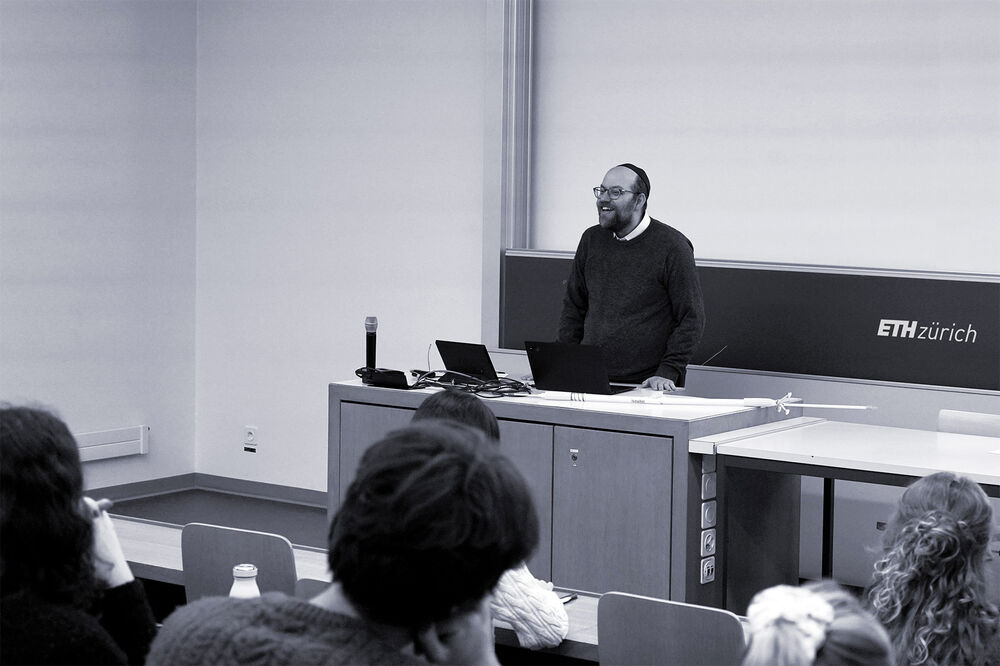
Lecture 2: Ion Channels and Membranes
February 26, 2026This lecture focuses on the Hodgkin–Huxley equation and its role in modelling neuron dynamics. It introduces phase plane analysis to build intuition for non-linear neural dynamics and transitions between different behavioral regimes. The lecture also covers temporal discretization and numerical methods used to simulate neural activity, highlighting the challenges involved in such simulations. In addition, students are introduced to the widely used NEURON software from Yale. The accompanying exercise project involves implementing a simplified Hodgkin–Huxley–type simulator, exploring time integration schemes, and performing a phase-plane analysis.
Slides
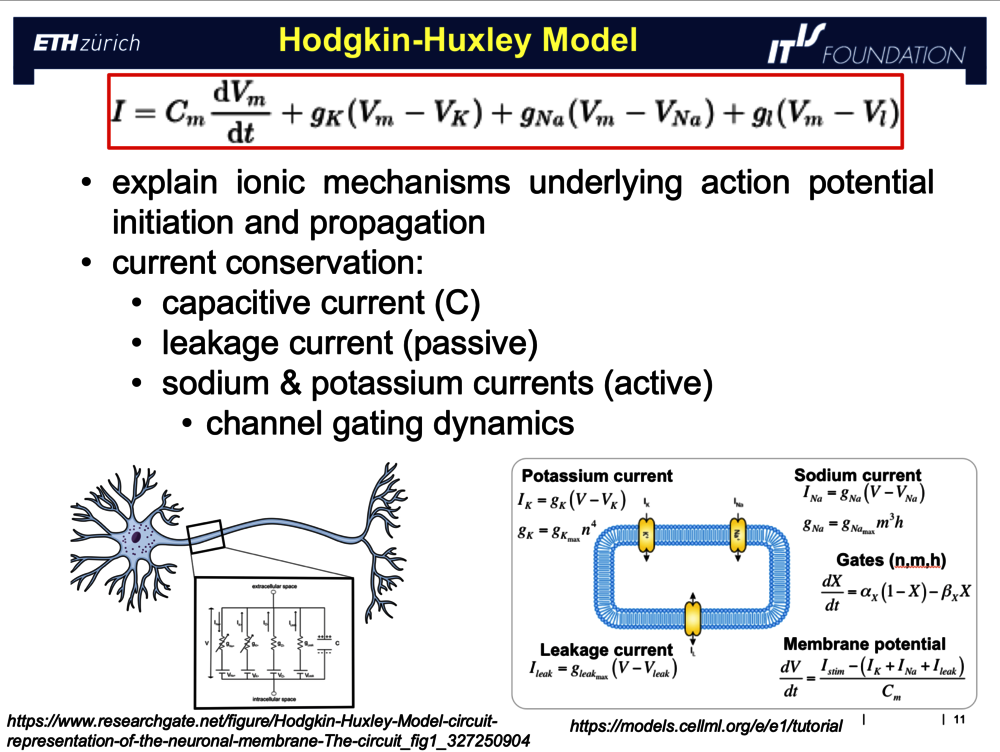
Lecture 3: Axon Models, Activating Functions, and Electrical Stimulation
March 5, 2026This lecture examines axonal electrophysiology and the models used to describe signal propagation in nerve fibers. It introduces the cable equation and compartmental models as key tools for understanding electrical behavior along axons. The lecture also explores extracellular stimulation, the activating function and its generalizations, and applications such as deep brain stimulation. By the end, students gain insight into neural interfaces for electrical nerve and brain stimulation and develop tools to interpret and predict neural fiber recruitment while optimizing stimulation effectiveness and selectivity. The accompanying exercise compares two methods for predicting axonal stimulation and investigates the impact of pulse shape.
Slides
Lecture 4: EM Field Simulation Fundamentals
March 12, 2026From Maxwell’s equations to neural activation maps – how do electromagnetic fields trigger neuronal responses?
This week's lecture introduces the fundamentals of electromagnetic field simulation used in bioelectronic medicine. Students will derive the quasi-static approximation commonly used in low-frequency electromagnetics from Maxwell’s equations. They then explore domain discretization (structured vs. unstructured meshes) and the finite element method (FEM), discussing solver strategies, preconditioning, and convergence using a reference anatomical head model with surface electrodes. The lecture focuses on building the electromagnetic simulation pipeline and understanding how electric fields are computed in realistic anatomical models.
Hands-on: modeling transcranial electrical stimulation (tES) in Sim4Life anatomical head and electrodes → FEM field simulation → (next week) neuron population → activation map
Slides
* The image of the person at the beginning is AI-generated.
Lecture 5: Peripheral Nerves & Interfaces for Bioelectronic Medicine
March 19, 2026How can electrodes be designed with the help of Sim4Life that selectively stimulate the right nerve fibers?
This week’s “EM–Neuro Modeling Across Scales for Bioelectronic Medicine” lecture at ETH Zurich focuses on the design of peripheral nerve interfaces for bioelectronic medicine.
From neuroprosthetics and electroceuticals, the session explores how nerve microanatomy and peripheral nervous system (PNS) structure define electrode design. Different approaches - cuff, penetrating, and epineural electrodes - are compared, focusing on selectivity, safety, and performance, with the vagus nerve as a key example.
How can the selectivity be assessed? The concept of the selectivity index is introduced to quantify how effectively stimulation targets specific fascicles. Engineering trade-offs between efficacy, power efficiency, and safety are discussed – highlighting model-informed design under anatomical variability.
Hands-on (Sim4Life):
. Extract recruitment curves from TIME vs cuff stimulation
. Compute a selectivity metric for two fascicles
. Simulate and compare eCAP recordings for two sensing electrode configurations
Slides
Lecture 6: Computational Pipelines for Personalized Spinal Cord Stimulation
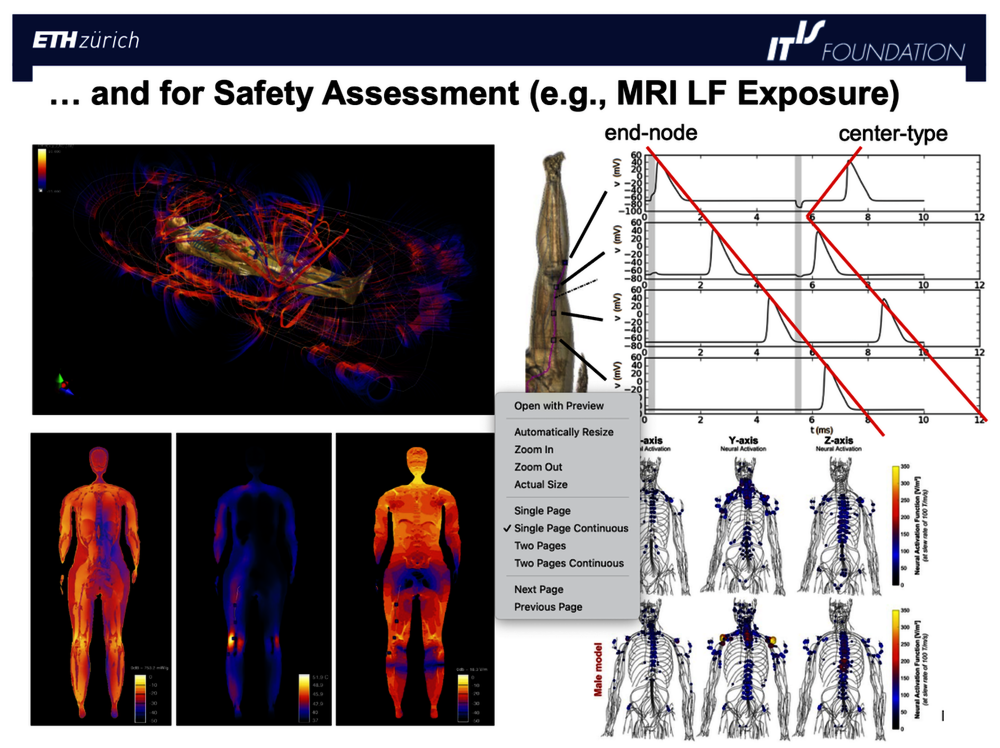
March 26, 2026This week’s “EM-Neuro Modeling Across Scales for Bioelectronic Medicine” lecture at ETH Zurich focuses on spinal cord stimulation (SCS) for restoring locomotion and managing pain – alongside key principles of low-frequency exposure safety.
In the lecture, it is explored how personalized computational pipelines can optimize stimulation strategies for paraplegic patients, comparing dorsal column vs dorsal root recruitment, and linking lead placement, contact geometry, and pulse programming to neural activation and selectivity.
How can stimulation be both effective and safe? It is shown how spinal anatomy and different tissue properties influence the epidural electromagnetic field (EMF) distributions and use model-based approaches to evaluate targeting precision and safety.
Slides
* The image of the person is AI-generated.
Lecture 7: Morphology, Synapses, Microcircuits; Point vs Spiking Networks
April 2, 2026This week’s “EM-Neuro Modeling Across Scales for Bioelectronic Medicine” lecture at ETH Zurich dives into neural modeling at all levels – from detailed morphologies to abstract spiking networks – and how they help us understand brain function and stimulation.
When does biological detail really matter? In the lecture, morphologically detailed circuit models are compared with simpler point-neuron and spiking neural network (SNN) models, showing how synaptic mechanisms drive microcircuit behavior.
From synapses to circuits, the lecture explores how modeling choices impact predictions – and how simplified representations can still capture key dynamics. Using deep brain stimulation (DBS) circuit motifs, it is illustrated how these models help study stimulation effects on local neural activity with clinical relevance.
Hands-on: Students will start working on their Mini Project.
Slides
* Animation includes AI-generated images.
Lecture 8: Neural Mass & Whole-Brain Models; Hybridization
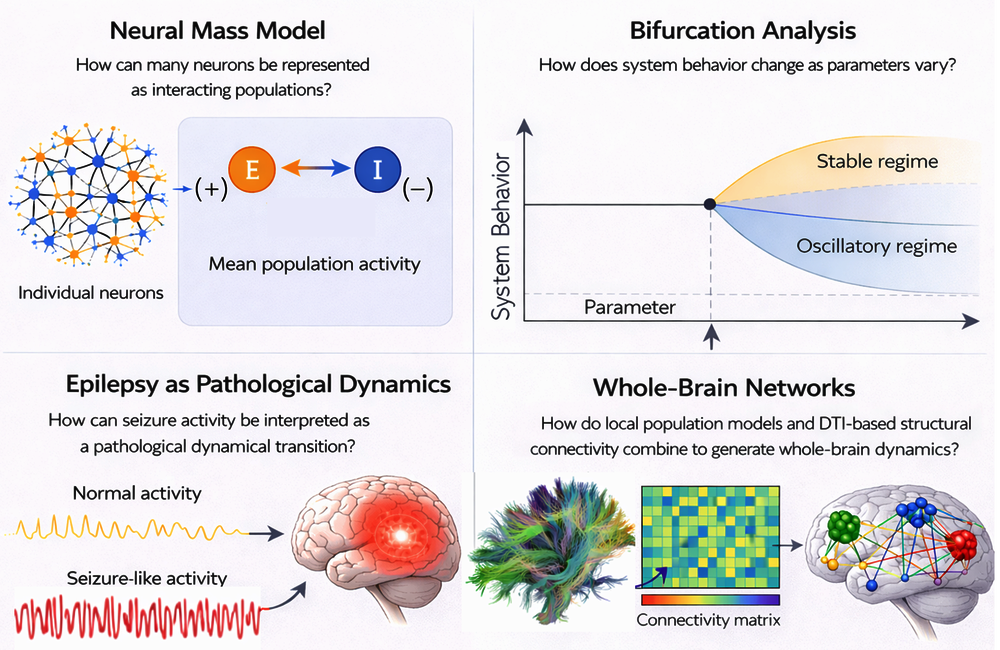
April 16, 2026This week’s “EM–Neuro Modeling Across Scales for Bioelectronic Medicine” lecture at ETH Zurich marks a transition from the peripheral nervous system (PNS) to the brain, and from single-neuron models to neural population dynamics.
In the lecture, neural mass models (NMMs) and how they enable simulation of brain dynamics at the network level are explored. It is shown how population-level models capture large-scale brain activity, linking underlying biophysical mechanisms to emergent dynamics. Numerical methods, such as stochastic integration techniques, are used to simulate realistic brain behavior under noise and variability.
How do brain states emerge and change? Using bifurcation analysis of a two-population NMM, oscillations, stability, and state transitions are examined with epilepsy as a key use case.
Scaling up, whole-brain modeling (WBM) is introduced, combining region- and surface-based approaches with diffusion tensor imaging (DTI)-informed structural connectivity to enable personalized brain dynamics modeling.
Note: This week’s exercise session will be replaced by a guest lecture from IT’IS director Prof. Niels Kuster, who will share his story of building spin-offs and translating research into impact.
Slides
Lecture 9: Recording Modalities, Signal Content & the Reciprocity Theorem
April 23, 2026This week’s “EM–Neuro Modeling Across Scales for Bioelectronic Medicine” lecture at ETH Zurich explores how we record brain activity and what these signals really tell us!
The lecture breaks down the biophysical origins of different recording modalities – from hMUA and LFP to EEG, MEG, fMRI, and eCAPs – and show what aspects of neural activity they capture across scales.
How do we link signals to sources? The reciprocity theorem is introduced to bridge electroencephalography forward modeling with stimulation targeting (tES), highlighting how modeling can inform both recording and intervention strategies. This approach helps interpret signals and optimize the design of recording setups to maximize information content, while also emphasizing the selection of engagement metrics that are biophysically interpretable and experimentally testable.
Hands-on: Students will focus on their Mini Project during this week’s exercise session.
Slides
* The image of the person is AI-generated.
Lecture 10: Non-Invasive Brain Stimulation & Temporal Interference
April 30, 2026This week’s “EM–Neuro Modeling Across Scales for Bioelectronic Medicine” lecture at ETH Zurich explores non-invasive brain stimulation (NIBS), with a focus on temporal interference (TI).
The lecture begins with modeling approaches for conventional tES techniques – including tDCS, tACS, and TMS – exploring how electric and magnetic fields interact with the brain across different stimulation paradigms.
Next, TI stimulation is introduced, discussing its potential for deep brain targeting and practical considerations such as carrier frequency, envelope design, and key limitations. An overview of the ongoing debate surrounding the mechanisms of TI is also presented, along with some of the leading theories.
Building on previous concepts, multi-objective optimization strategies are revisited to balance stimulation strength, selectivity, and collateral effects, highlighting the value of model-informed decision-making.
In place of our regular exercise session, we’re pleased to welcome Prof. Reto Huber from the University Children’s Hospital Zurich (Kispi). He will share first-hand insights into the application of transcranial interference (TI), transcranial magnetic stimulation (TMS), and acoustic brain modulation in both research and clinical settings.
Slides